


 0
0
Your cart is currently empty!
 Chat
ChatFall is when everyone suddenly starts paying attention to their outdoor lighting, whether they planned to or not. The days shrink fast this time of year, and before you know it, it’s dark at 6 pm instead of 8. If your porch, barn, or garage still relies on a light you have to turn on and off by hand, fall is the best time to upgrade.
Dusk to dawn barn lights solve a problem that we don’t typically consider until it’s inconvenient. These fixtures use a photocell that automatically turns the light on when natural light fades and off when the sun rises. And I like these options over ones with timers because there’s nothing to reset when the clocks change and nothing to fuss with outside in the freezing cold.
Why Fall is the Season that Matters
Summer Lighting is more forgiving. The sun sticks around until almost nine, so a light that’s a little slow or a little early barely registers. Fall doesn’t give you that same room for error, and I notice the shift every year around the same time. Kids are waiting at the bus stop before sunrise. You’re getting back from an evening run, and it’s already dark. Your walkway needs to be lit earlier than you’re used to. A photocell-equipped barn light handles all of this without being told. It doesn’t care whether sunset lands at 8:30 in July or 6:15 in November. It just reads the light outside and reacts, day after day, with zero input from you.
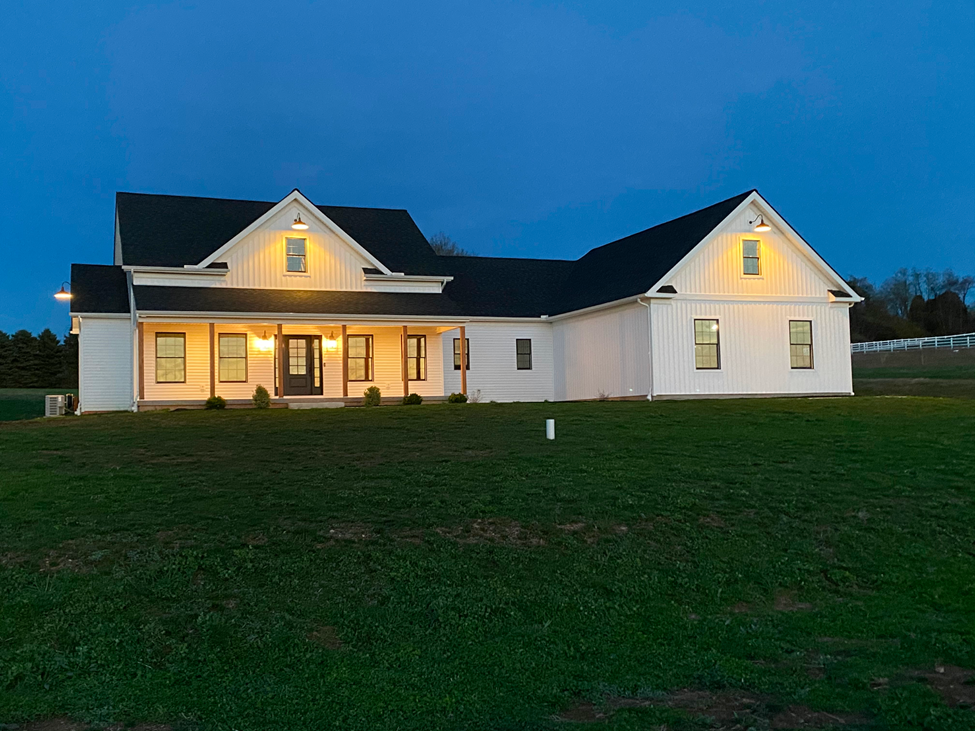
I think people overlook the fact that a house with lights that come on as it gets dark is a genuinely good security measure. A home that lights up automatically at dusk looks occupied, even when nobody’s there, which matters more for long dark evenings and even darker porches.
What Counts as a Barn Light
Fixtures with a downward-facing curved arm are commonly referred to as barn lights. They trace back to early 20th-century farm and barn buildings, which is where the name comes from. Most of them are made from powder-coated steel or aluminum, which is why they hold up so well outdoors through rain, wind, and all the temperature fluctuations that come with changing seasons
The dusk to dawn version simply adds a photocell sensor into that same durable fixture. It’s essentially a century-old design that finally caught up with modern convenience.
Picking the Right Size
This is where most people get stuck. There’s a wide range of sizes out there, and getting the scale right matters more than people expect. A fixture over a small side door should be noticeably smaller than one mounted at the end of a barn or above a garage door. Measure the spot you’re lighting before you buy anything. A fixture that’s proportional to its location will always look more intentional than one that’s simply the biggest option available.
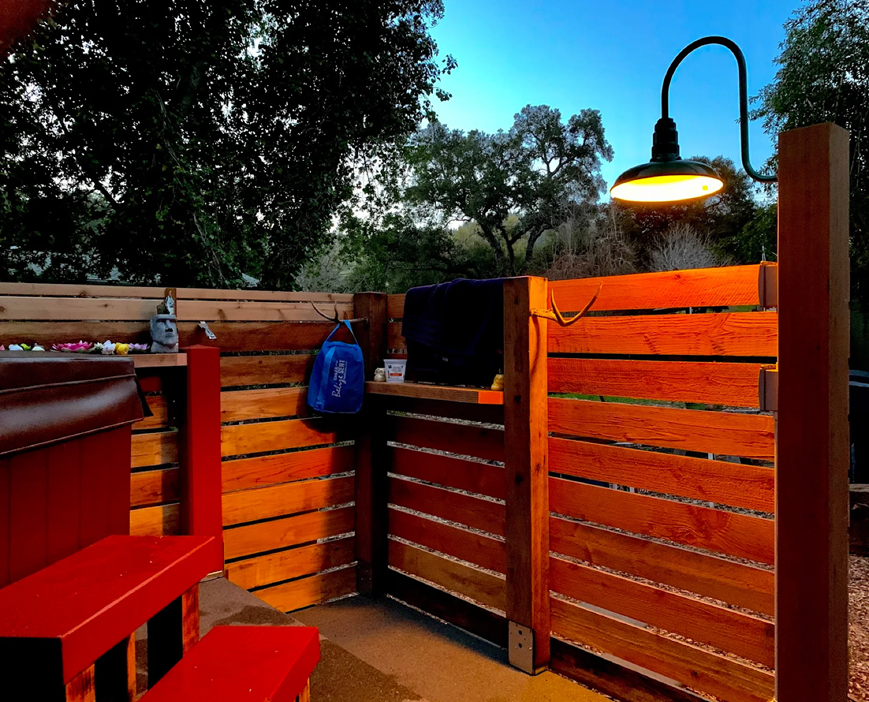
If you’re looking for something with a touch of nostalgia, I would suggest the Topanga. A fixture that takes on the warm appeal of a gas station light with its slightly curved lip. It will look right at home over a porch or patio, or mounted outside a garage. It has enough character to stand out without looking out of place on a more modern home.
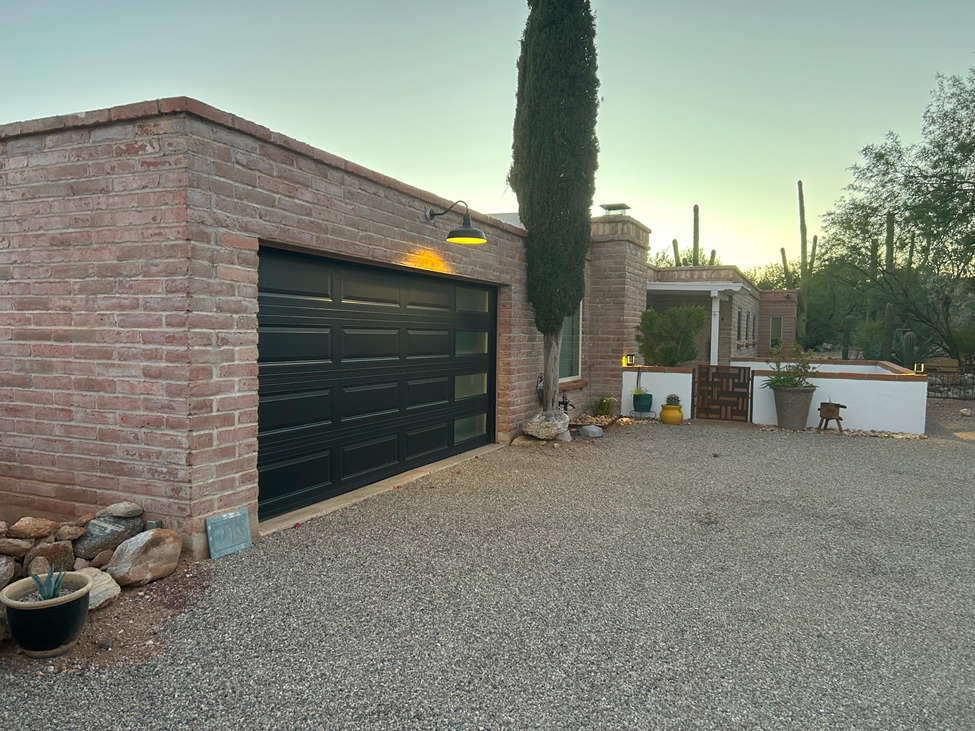
I always recommend the Gardena when someone wants a classic, storied barn light. It’s the image that comes to mind for most people when they think of one. The gooseneck’s upward curve creates that traditional barn look. It also has a spun-steel dome that holds up well against the elements. It works on a farmhouse, a modern build, or anything in between, which is a big part of why it’s stayed popular for as long as it has.
Know When to Go Big
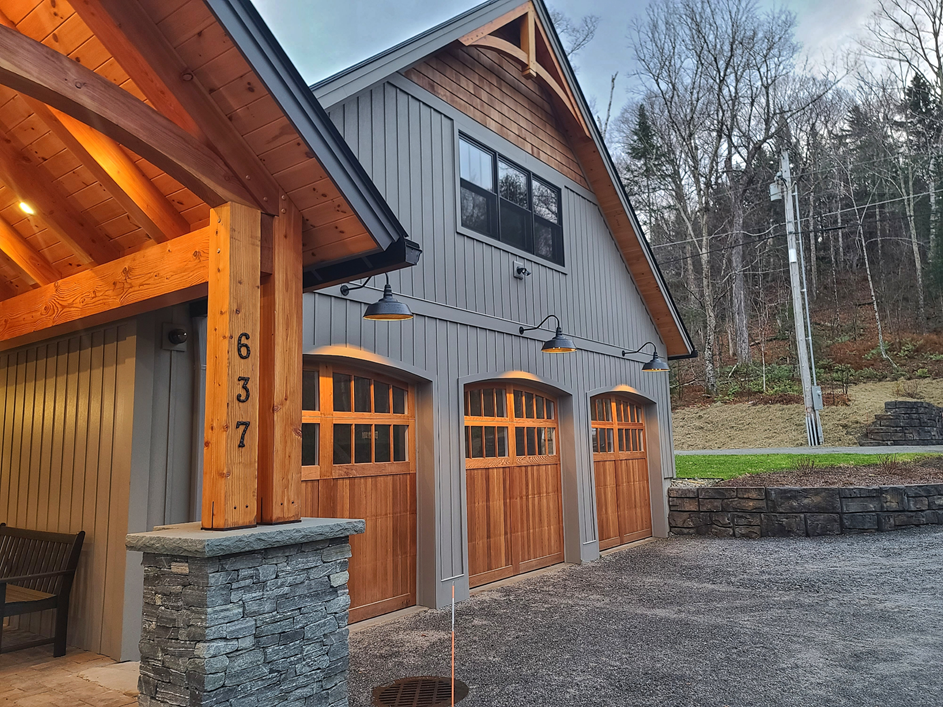
If you want to make a big statement, consider the Redondo light with a 20-inch dome on a gooseneck arm. I would only suggest this one for a barn, industrial warehouse, or on the exterior of a home that has the square footage to warrant it. That’s because it’s a fixture that commands attention. Essentially, it needs a decent amount of space to really work.
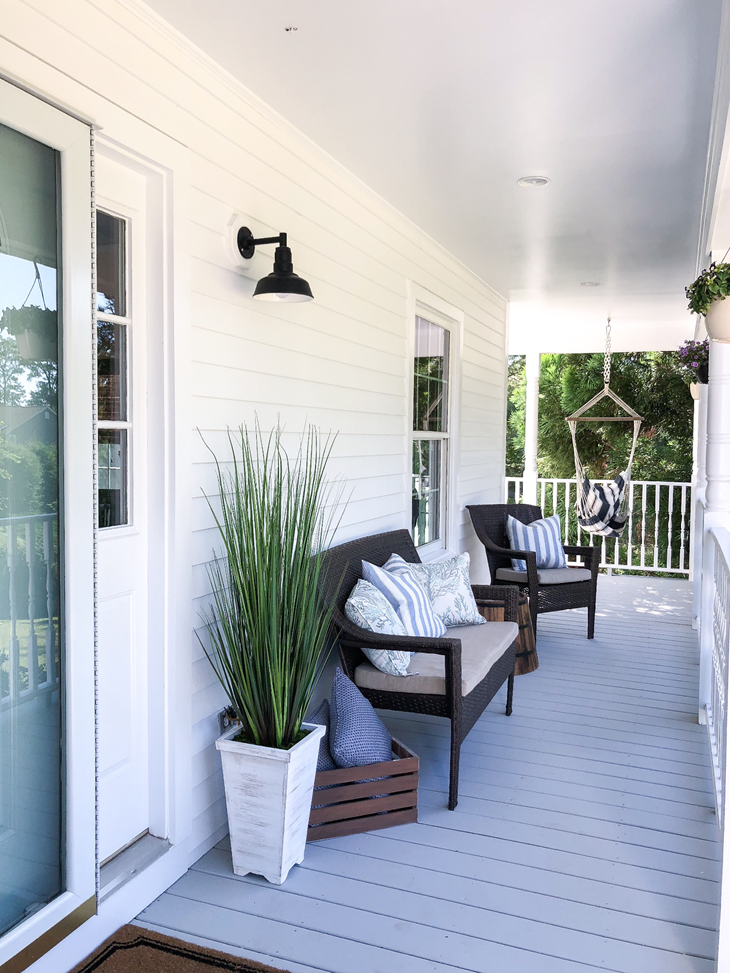
On the smaller end, the Hawthorne keeps things compact with an 8-inch dome. Don’t be fooled by its size, though, as it holds up just as well as its bigger siblings. It works nicely as a wall sconce by a side door or front porch. It is also small enough to use indoors, so if you like the look but only have a tight spot to work with, this one tends to fit where the bigger fixtures can’t.
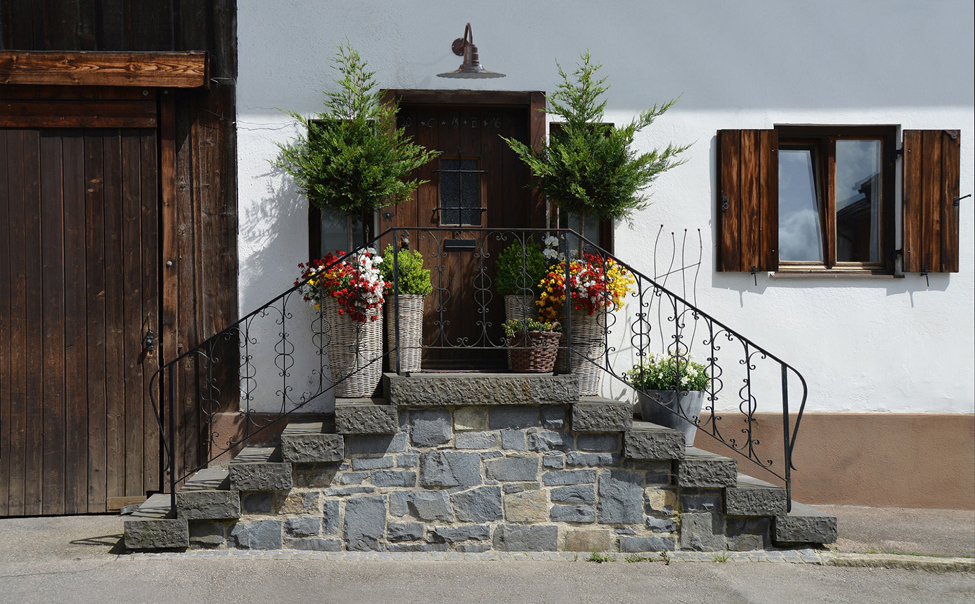
And if you want something a little different from the usual, I’d point out the Highland Park. It is a fluted 16-inch dome in a retro style that has won the hearts and homes of many. It may not be a fixture for every spot, but it is usually the one guests comment on because of its character.
Photocell, Timer, or Motion?
Not all automatic barn lights work the same way, and I get asked about this distinction a lot. Lights that turn on and off based on a photocell are the most reliable fixtures. But you’ll find plenty of others that use a timer, and some that are even activated by motion.
Timers are good in theory, but we tend to forget to change them as the clock changes. And if you do forget, you’re likely to have a light that’s on in the middle of the day when it’s not needed. Or one that’s off when it’s needed most in the evening. If you opt for a timer in the fall, I would suggest checking the timer every couple of weeks so it doesn’t fall out of sync with actual daylight.
Motion-activated exterior lights provide good security, but they only turn on when they detect movement. So if you’re looking for continuous lighting after dark, they may not be an ideal option. I would recommend combining a photocell fixture and a motion-activated light. You can run the former at the main entrance and the latter somewhere with less traffic, like a detached garage.
Getting Ready for the Season
Fall doesn’t wait around, and neither does the sunset. If your exterior lighting still depends on your memory (to flip a switch before it gets dark), I believe dusk to dawn barn lights are a reasonable consideration. Pick a dome size that fits your chosen spot and opt for a photocell compatible model that screams low maintenance. You will have one less thing to worry about as the evenings get shorter and the season settles in.