


 0
0
Your cart is currently empty!
 Chat
ChatThere’s a secret side to your outdoor space, the part that only comes alive at night. However, most people miss out on this unique characteristic because they haven’t yet figured out the lighting. Outdoor lighting installation is that one project that is continually deferred until it becomes a necessity. Yet when executed properly, it transforms the way you experience every square foot of your property after sunset.
Here’s a breakdown of successful applications, zone by zone.
Walkway and Path Lighting
This is arguably the most commonly neglected element in any outdoor lighting installation plan. Homeowners tend to allocate most of their lighting budget to the porch and patio area, neglecting the walkway that connects them, which remains cloaked in darkness. This should be reversed.
When lighting long stretches of walkway, post-mounted straight-arm fixtures perform a unique function that low-voltage path lights cannot. They cast light across a wide area while simultaneously creating structural visual elements in the room. Take something like the Topanga, a 14-inch dome light pictured below. When installed on a post along a garden path or driveway, it holds its own aesthetically during daylight hours, and truly earns its keep at night.
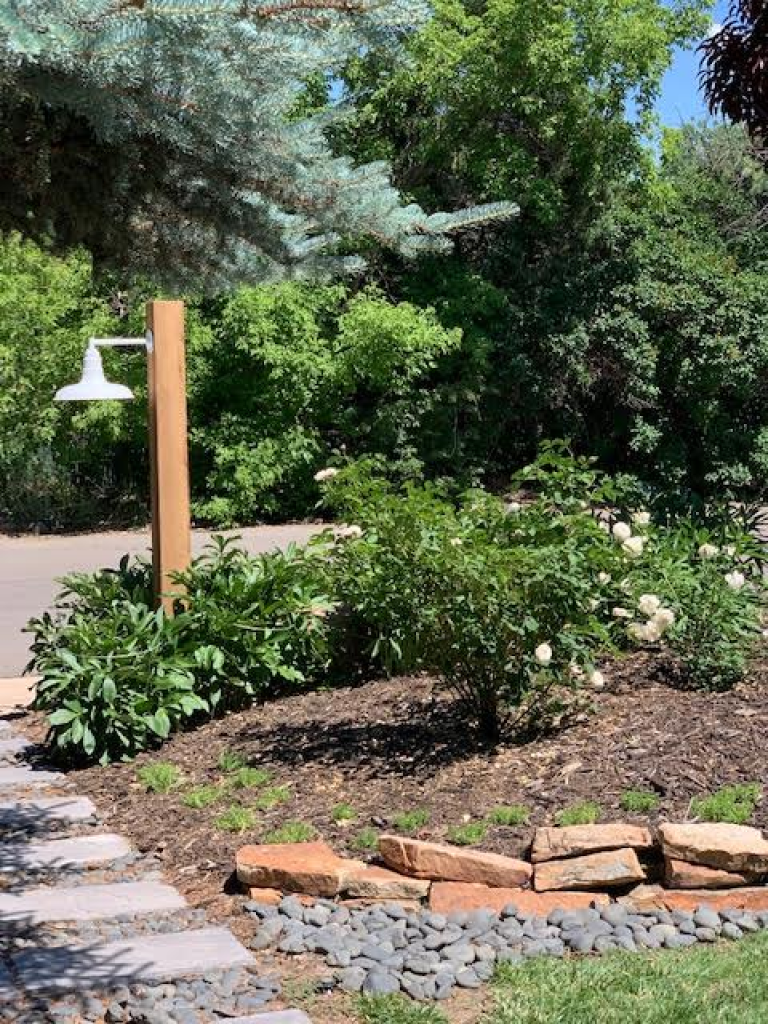
How you space your fixtures is more critical than the fixtures themselves. Posts that are too far apart will result in unlit areas, while posts that are too close will create the effect of a runway. For most residential walkways, a spacing of 8 to 10 feet between posts strikes the ideal balance.
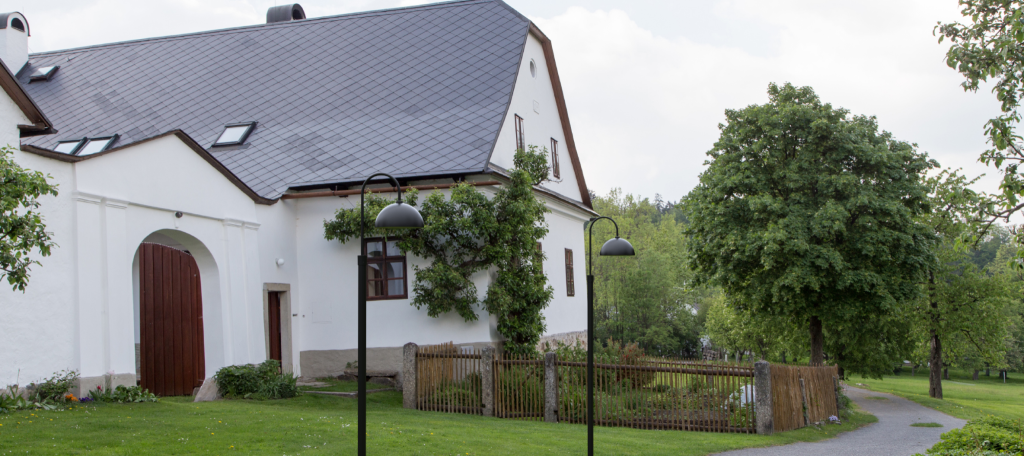
Another light that you might want to consider for walkway or pathway illumination is the Coldwater. Like the Topanga, it boasts a 14-inch dome with a gooseneck arm. But while the Topanga has a classic look and feel, the Coldwater has a modern vibe. Ultimately, you can use them individually or separately for walkway illumination.
Patio Lighting Ideas
The patio makes for truly dynamic outdoor lighting applications. While string lights are widely popular, they offer only one element of the overall lighting strategy and do not constitute a complete solution. So, I almost always recommend a combination of overhead ambient light for general illumination and targeted task lighting near seating or dining surfaces.
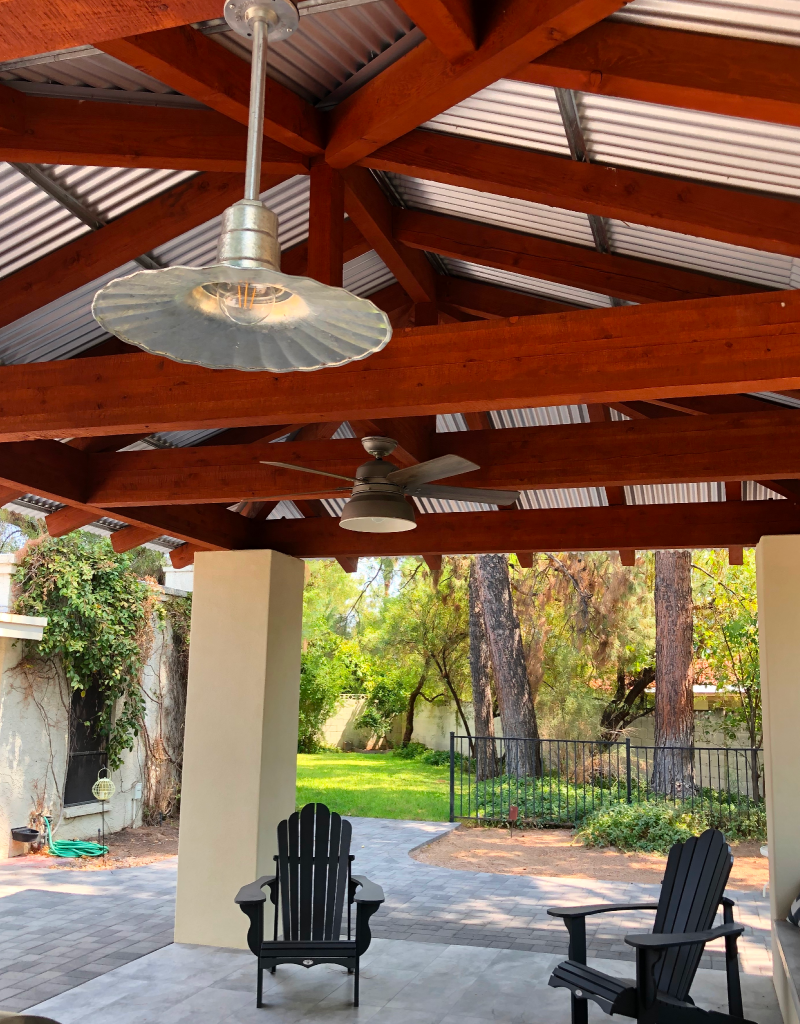
A visually-appealing pendant is far more effective at enhancing the character of a covered patio or pergola overhang. I can’t say the same for a flat, bland overhead fixture. Thankfully, the Eagle Rock comes to the rescue. It is furnished with a 16-inch fluted dome pendant that draws attention without being overwhelming. Also, I especially love its slightly quirky character, which complements an overhang, appearing as an intentional design element rather than an overlooked addition. If your patio has a defined ceiling, this fixture will contribute to a polished, complete look.
Outdoor Seating Ideas
Outdoor seating areas are transitional zones between interior and exterior design, and their lighting should reflect this. The use of a defined structure provides more flexibility, but the fixtures must still be able to withstand the elements (Including the visual demands of an open-air environment).
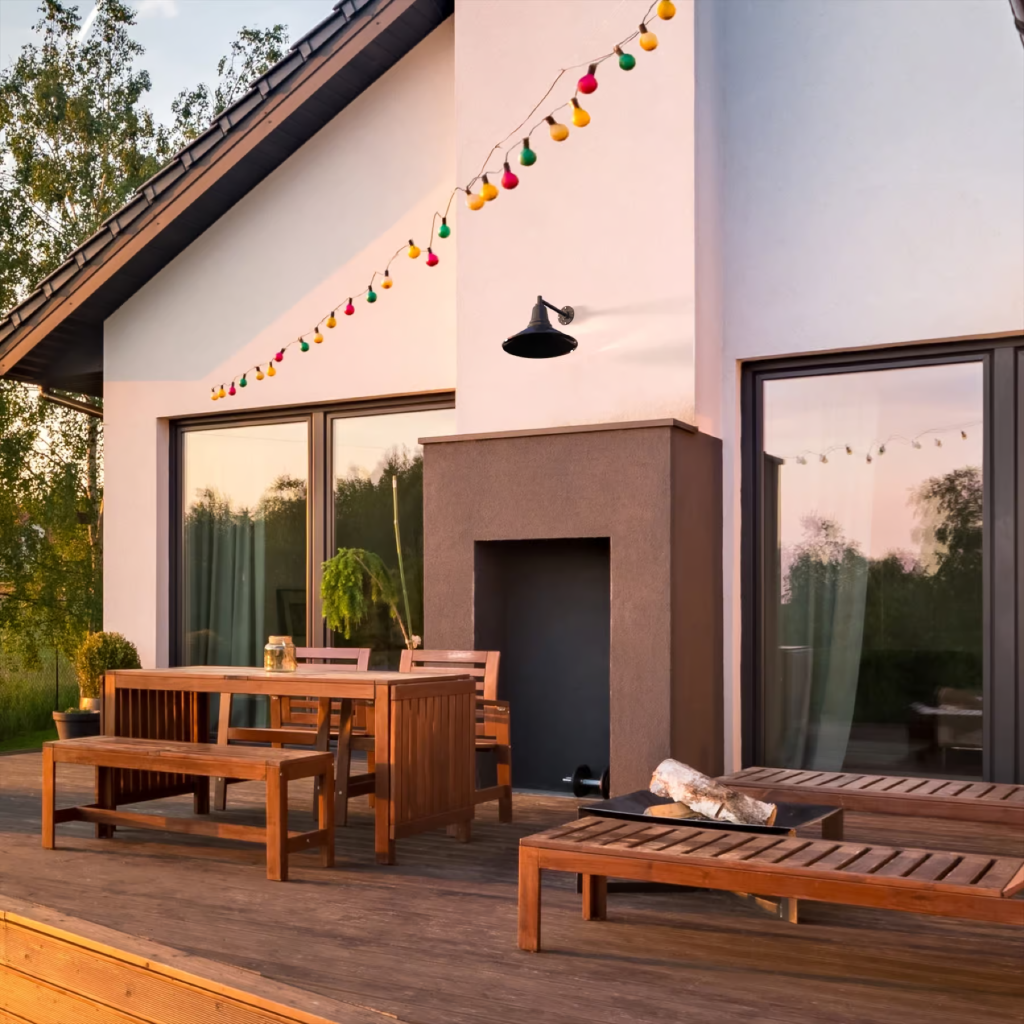
For wall-mounted lighting in a an outdoor seating area, conical barn lights work well because they direct light downward where it belongs rather than scattering it everywhere. The Riverside is a 16-inch conical barn light, and honestly it’s one of those fixtures that doesn’t box you in. Modern exterior? Works. More traditional farmhouse feel? Also works. That kind of flexibility matters when you’re committing to something that’s going to live on your wall for the next decade. Mount it at a height where the light falls across the seating area rather than straight down, and it handles both the functional and aesthetic sides of the job without you having to think twice about it.
Entryway Lighting
Your front entrance has two key roles to play; it should look inviting during the day and be functionally illuminated at night. Cookie-cutter coach lights tend to look dated quickly. For wall-mounted entry fixture considerations, a barn light with some character offers a better long-term value.
Consider something like the Colfax , a 12-inch cone-shaped barn light that blends vintage style with a refined, traditional design. Its compact size makes it ideal for placing beside a front door without dominating the facade. Its aesthetic is compatible with a variety of exterior styles, from modern farmhouse to more traditional designs. As a wall-mounted counterpart to the Woodman, it offers a similar versatility to vertical surfaces. It is ideal for entryways where a thoughtful yet understated look is desired.
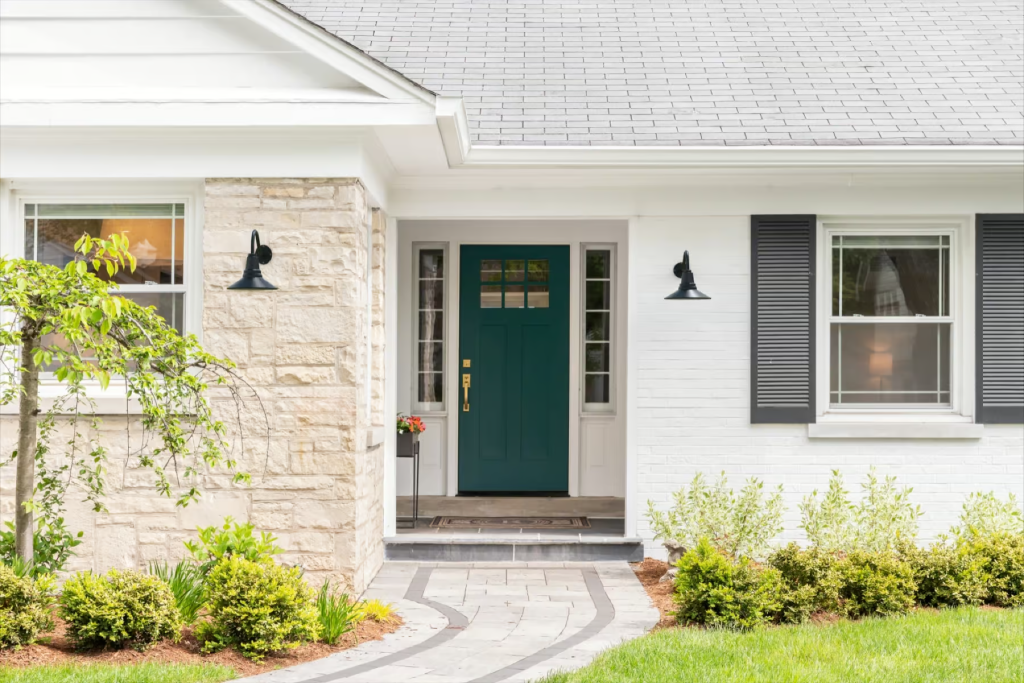
The ideal mounting height is approximately eight feet from the ground for a single-story entryway. Mounting it lower will blind guests as they approach the door. Also, mounting it too high will not provide sufficient illumination at ground level, where it is needed most.
Outdoor Dining Areas
Outdoor dining lighting is one of those things you don’t notice when it’s done right, but you absolutely notice when it isn’t. Eat under a harsh floodlight once and you’ll understand why it matters. The goal is light that feels warm and contained. Something that makes the table feel like the center of the space rather than just a surface sitting in the yard.
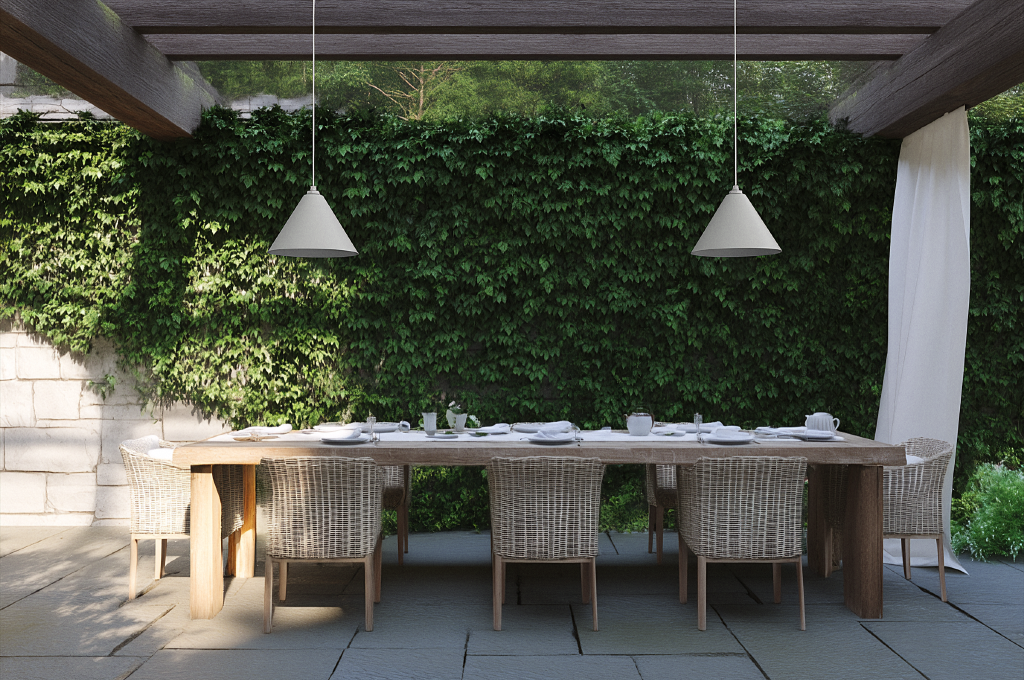
Pendant fixtures are the most reliable way to get there. Hung centered over the table, they pool light downward without washing out the whole area, and they give the space a sense of definition that wall-mounted or string lights alone can’t quite deliver. The Moorpark is a 14-inch classic lampshade pendant with that cone shape that just works over a table. It’s not trying to be a statement piece, it’s just doing its job well, and in an outdoor dining setting that’s exactly what you want. A fixture that makes the space feel pulled together without demanding attention.
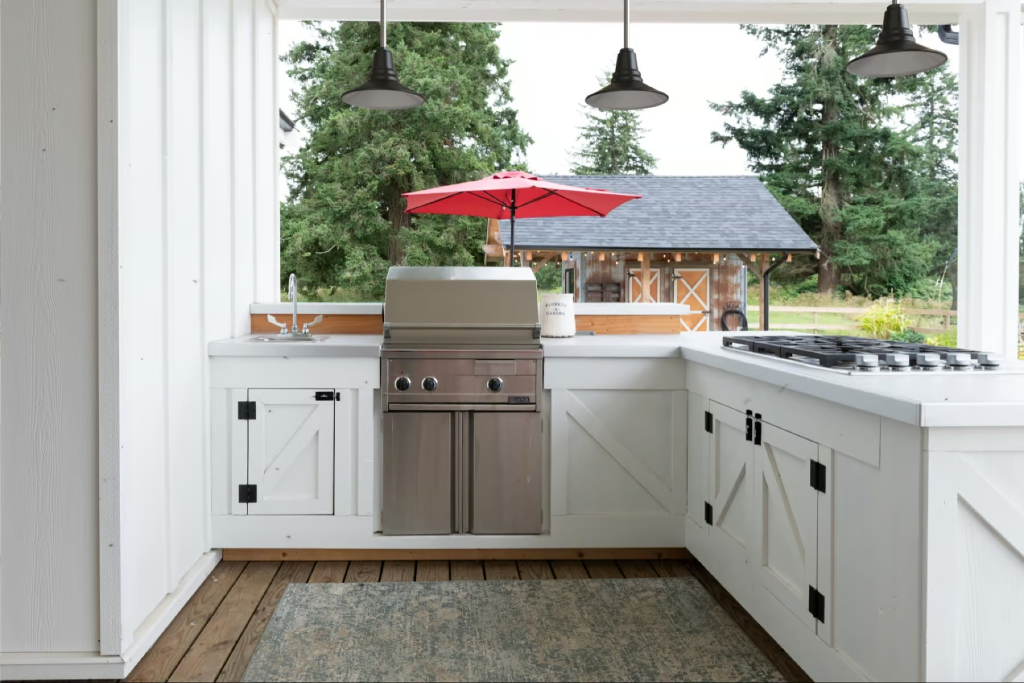
Now let’s talk about the Woodman , which is a 12-inch conical dome pendant. If you’ve got an outdoor kitchen going, it’s one of the best bets out there for an overhead task light over the prep and cooking zone. String them together in a row over an outdoor counter, and you get the down-light you want without making the outdoor dining area look like a worksite.
Installing Outdoor Lighting: A One-Time Investment
Most people ultimately find themselves redoing their outdoor lighting installation because the first attempt was rushed. Fixtures were selected without a coherent plan. Wiring was run without distinct zones, and the lighting levels, while appearing acceptable at the hardware store, prove to be inadequate once at home. Repeating this mistake is costly.
Rooms that are truly functional and visually pleasing at night all share a common foundation: lighting was considered an integral design element, not an afterthought. Each zone served a specific purpose, and every fixture was thoughtfully placed. This is not a difficult standard to achieve; it simply requires proactive planning before the first wire is installed.
There is untapped potential in your outdoor vicinity that you may not yet be aware of. The correct outdoor lighting installation plan will finally unlock this potential for you.