Whether you use your garage for weekend projects or car storage, don’t overlook your garage lighting. A well-lit garage can make your work a lot easier, while a poorly lit one will leave you frustrated. Unfortunately, a single overhead bulb doesn’t always cut it, and that’s where LED garage ceiling lights come in.
Before you start shopping for garage lighting, keep in mind that garages come in different shapes and sizes. As such, if you don’t do your homework, it might be challenging to know which fixture fits best. Essentially, a single-car garage with an 8-foot ceiling has different requirements than a three-bay 12-foot workshop. So instead of giving you a generic list, I’d like to show you how to choose the best bulbs for your space. Let’s get started, shall we?
Why LED Garage Ceiling Lights?
Interestingly, garages are a much more delicate environment compared to living spaces, so it’s important to choose fixtures that can stand up to the conditions. LED garage ceiling lights are long lasting and won’t flicker like traditional fluorescent bulbs do after a few years. They also emit a cleaner, whiter light that is better for seeing finer details.

While energy efficiency is always a plus with these fixtures, many people overlook the fact that they turn on instantly. You don’t have to wait for bulbs to warm up and reach full brightness, which makes the garage feel welcoming as soon as you flip the switch.
Measuring the Room
First things first, I want you to grab a ruler or tape measure and get familiar with your space. In most cases, a single-car garage is usually between 200-250 square feet, and a two-car between 400-500 square feet. For standard 8-10 foot ceilings, you should probably opt for flush or semi-flush LED garage ceiling lights. These are the closest you can get to overhead lights in your garage without reducing the ceiling height.
If you have higher ceilings, say 12 or more feet, I’d recommend going with a longer pendant-style light. This type of fixture will situate the bulb closer to the working surface instead of throwing light upward and wasting some of it.

For higher ceilings, I’d recommend the Carson, a 16″ steel dome pendant. It is one of our most popular barn light styles. It is specially structured to be extra durable for areas like workshops while being small enough to fit in a finished garage.
Planning the Layout
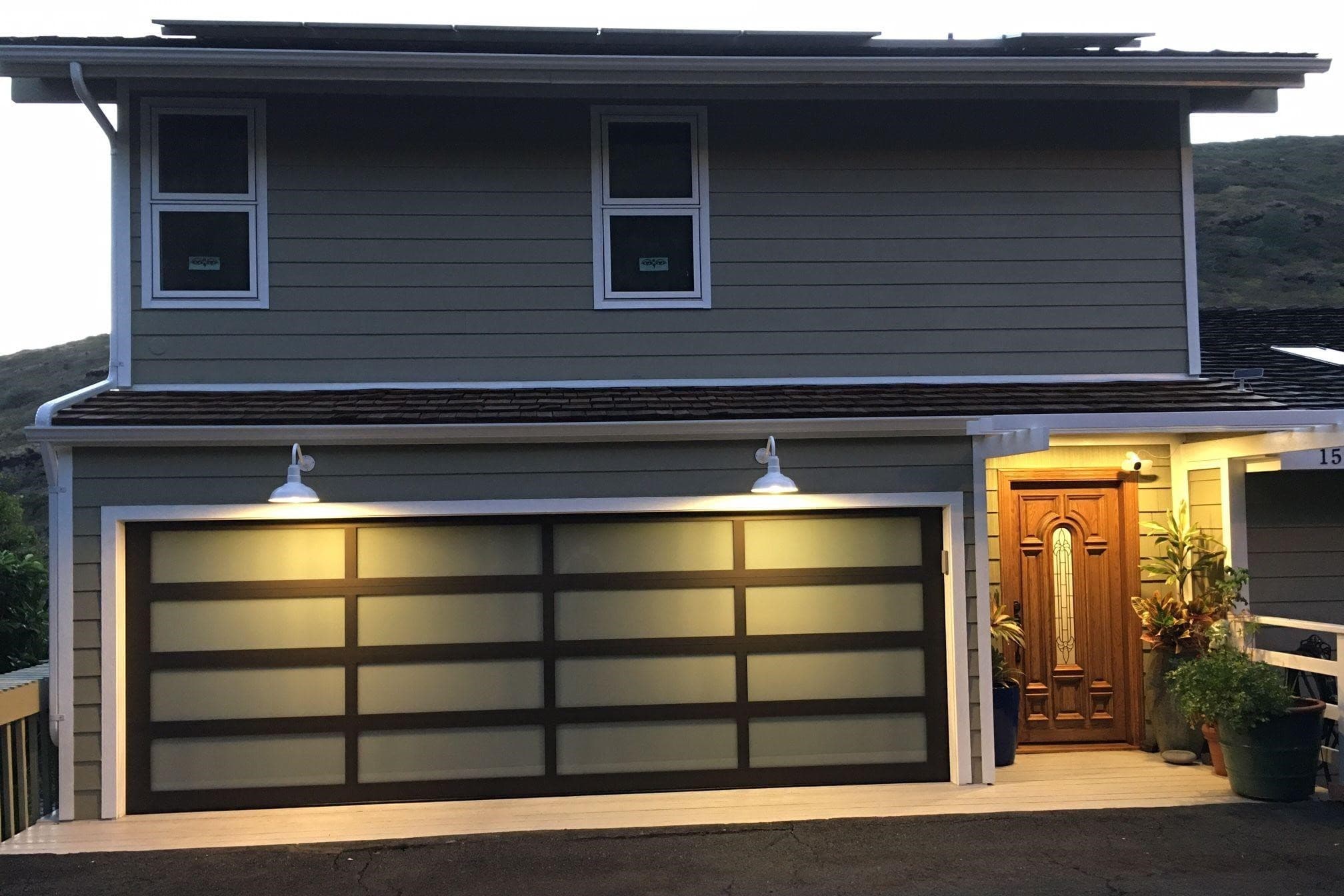
Now that we’ve covered sizes, it’s time to think strategically. I always encourage people to avoid installing a single light in the center of the ceiling. Leaving corners in the dark is a major visibility flaw, especially if you need to see what’s on those garage walls. Instead, I’d recommend one central fixture in the open area of the room. You can pair this with smaller fixtures placed near workbenches or parking spaces. If you have a garage door opener along one wall, it will be wise to install additional LED garage ceiling lights. I say this because this part of the garage is typically prone to shadows.

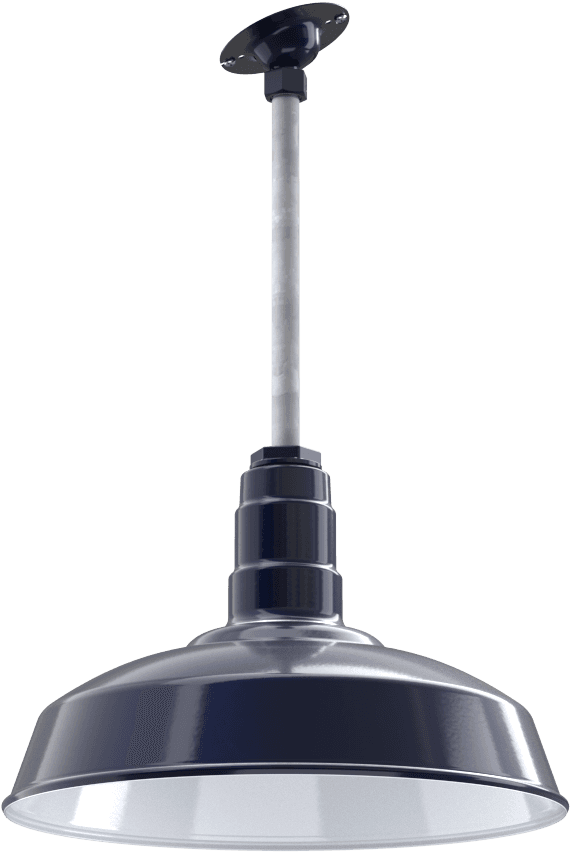
For larger, taller garages with generous square footage, especially 15-foot ceilings or higher, the the Manhattan comes into play. This fixture is outfitted with a large dome at 20 inches, and is best suited for a 15-foot or higher ceiling. I wouldn’t recommend it for small garages because it will overpower the space. The Manhattan is best used in large open workshops. And if you’ve converted your barn into your personal workspace, it’s also a good pick.
Color Temperature
Speaking of colors, another often overlooked aspect of LED bulbs is the different color temperatures. While some may argue about which is best, you can’t go wrong with something in the 4000-5000K range for tasks that require good color visibility. Warmer tones tend to lean toward the orange spectrum and can cause colors to appear differently than they are in natural daylight. If you need to see exactly what shade something is, stick to the cooler tones in the 4000-5000K range.
Also consider the bulb’s CRI, or color rendering index. Anything above 80 is decent, but if you’re doing intricate work, painting, or other projects that require true colors, look for higher-than-average CRI ratings.
Fixtures That Fit In Between
I always try to avoid putting people in a difficult spot, and garages are no exception. If you have something in-between, like a garage that has both a workshop area and a storage space, it’s best to stick with a mid-sized pendant light.

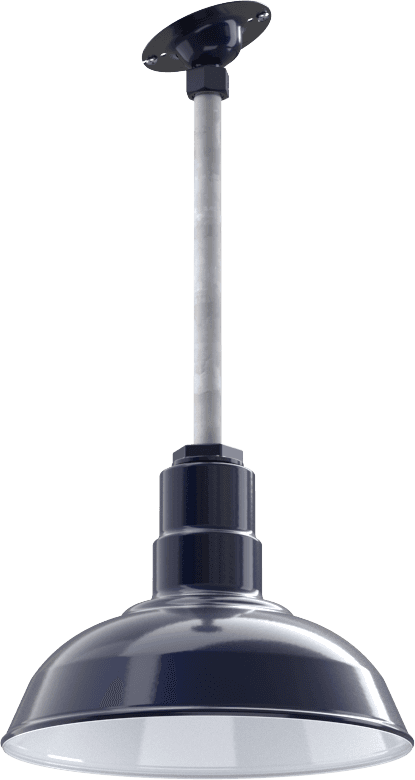
The El Segundo with a 12″ diameter is our most popular in this category. It’s small enough to fit in a finished garage, but still robust enough to survive outside if you need it to. If you’re lighting up an open pavilion or porch alongside your garage, this could also be a good option to spread out the light.
In Summary
Good garage lighting doesn’t start or end with buying the biggest or most expensive light fixture on the shelf. It’s about matching what you install with the function and structure of your garage. So measure first, prioritize your ceiling height and layout, and then choose fixtures suited to the work happening in there.
It is also smart to consider how your garage might change in the future. Garages can go from a car storage facility to a workshop, a home gym, or extra storage within a few years. So if your use of the garage might shift, it is worth choosing fixtures that are a bit more flexible than what you think you need right now. And flexibility is one of the many strengths of LED garage ceiling lights.
You could argue that swapping out fixtures later is doable, but nothing compares to getting the layout right from the outset. It will spare you the hassle of rewiring or repositioning as your garage evolves. That said, do it now and do it right!