A well-furnished room can still feel like something is missing. The sofa is right, the layout works, and yet it never quite pulls me in. Furniture and lighting do equal work here, and a room needs both to feel complete. Good lighting makes good furniture look better, and good furniture gives the light something worth falling on. And this is where lighting design comes in!
A well-planned lighting design? It should be unnoticeable. Instead of hearing someone comment, “Great layering,” you want to hear, “I want to stick around here.” Luckily, it’s super easy to get right…once you understand the basics! So follow my lead and read to the end.
Rule One: Use Layers, Not Just A Single Light
One light on the ceiling just isn’t going to cut it if you want to create beautiful lighting in your home. The secret to quality lighting design is in the layers.
There are three main types of lighting design you should be familiar with: ambient, task, and accent. You turn to ambient light to provide a delicate foundation that fills the room. Task lighting lets you read a book, make a meal, or shave with precision. Accent lights focus on a work of art, a room’s architectural feature, or textured wall. Not everyone needs all three, but adding two is a good place to start.

In a living room, I like the overhead fixture to stay calm and a little forgiving. Something like the Eagle Rock can set that base glow, and a couple of wall sconces can fill in the corners.

Glass can add a second layer of interest here. A glass light like the Atwater over a seating area gives off a soft glow. It feels more like a conversation light than a work light, which suits a room where people sit and talk for hours.
Rule Two: Match the Light to the Job
Light should respond to what you do in a room. You need a different kind of light for a kitchen than you do for a hallway. Sound obvious? Turns out we often fail to do this.
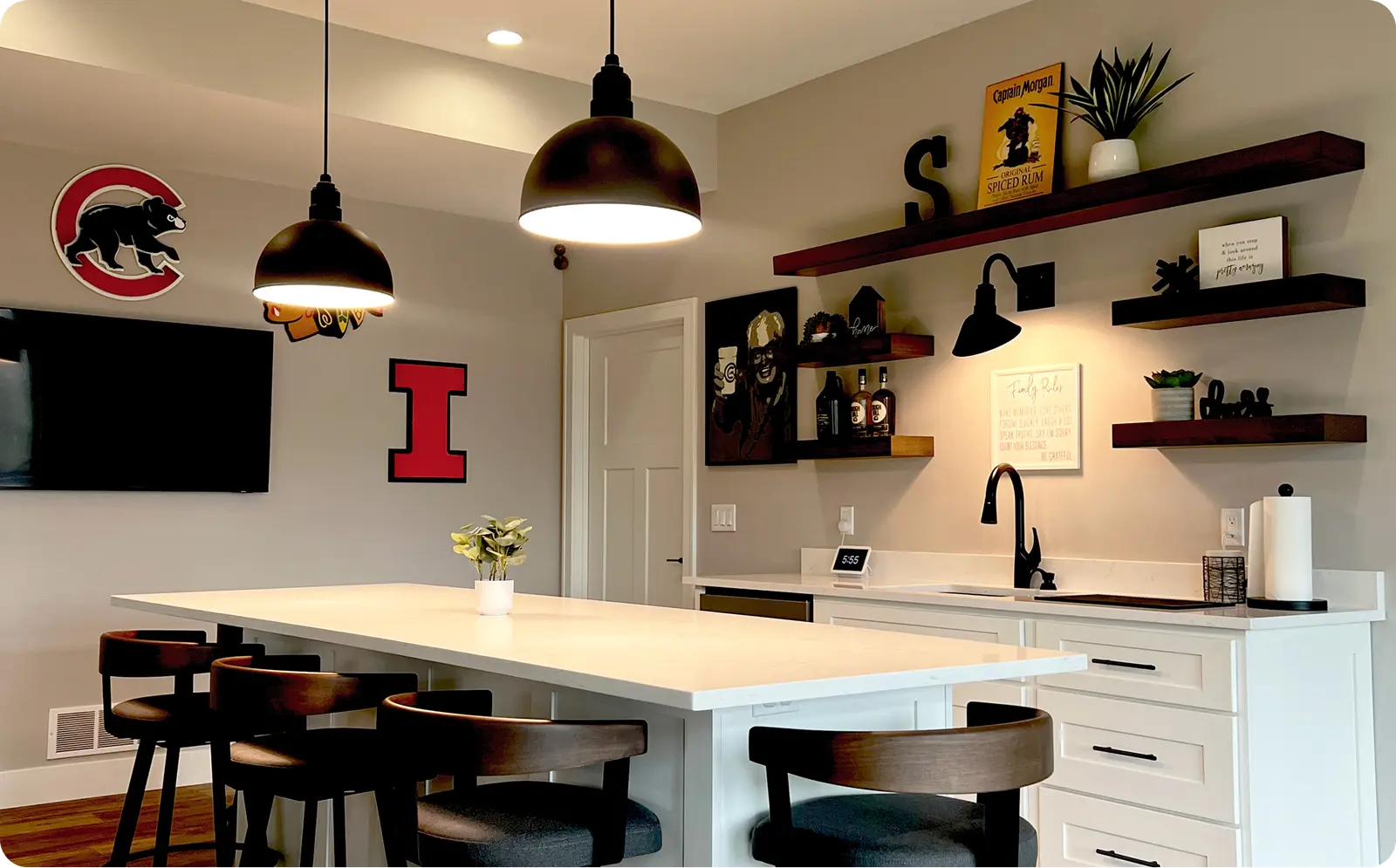
Kitchens are a case in point. A pendant over the island, like the Magnolia, gives you bright light where the work happens. It provides the room with a visual anchor that everyone will gravitate towards.

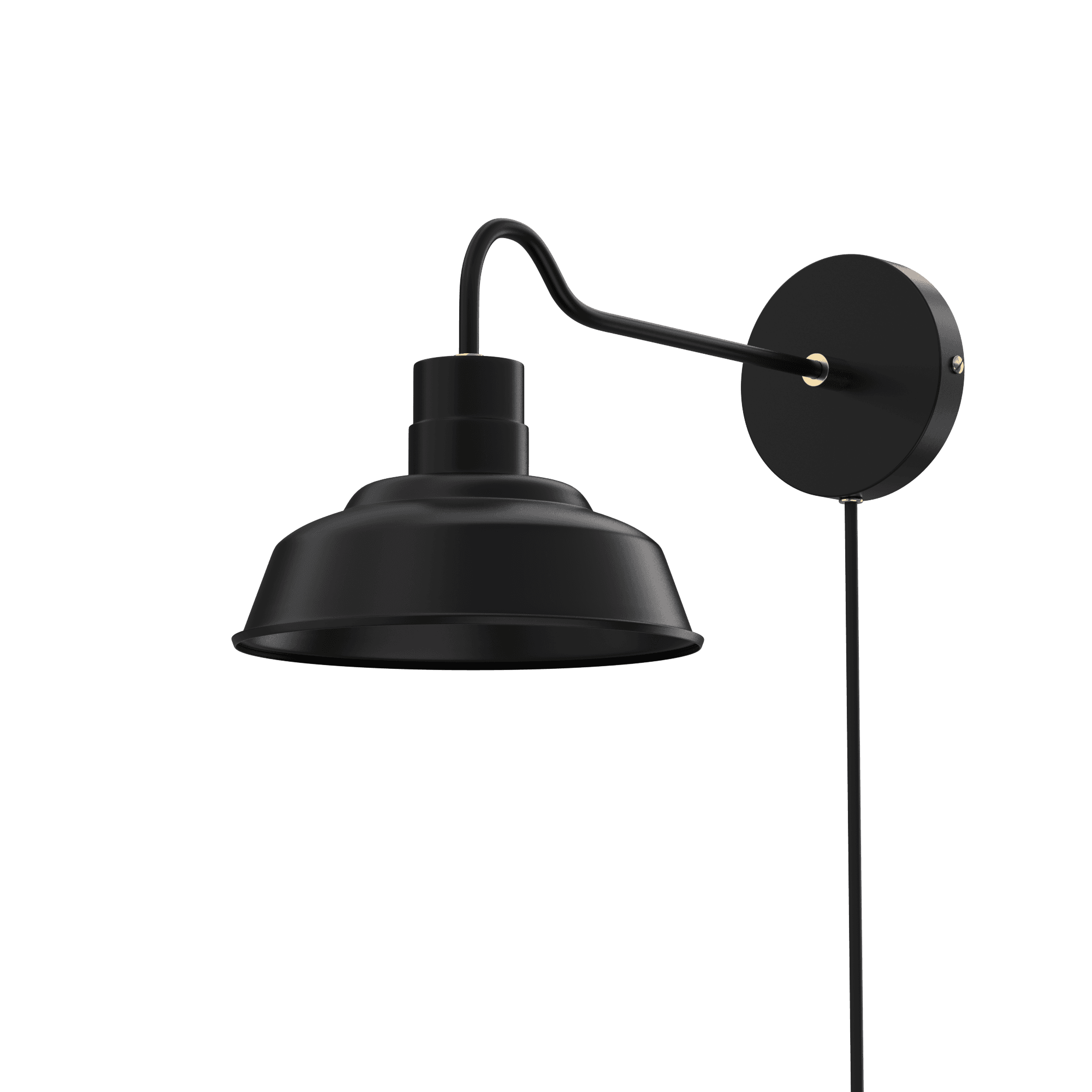
You can use the same approach for offices and study corners. Lighting experts always say that a desk works best with light that lands on the page and not on the screen. You can use a plug-in light like the La Brea over a small workspace or reading nook. It provides quality illumination without overpowering the whole setting.

Rule Three: Pay Attention to Warmth
There is a color to light, and its measured in Kelvin. Lower Kelvin lights appear warmer, while higher Kelvin appear colder.
For example, 2700 K provides the warm amber glow of a halogen light, and 5000 K makes you feel like you’re outside in the daylight. In the home, I tend to prefer that warmer (2700-3000 K) range for its comforting glow. In a workshop, I prefer the bright, daylight tones.

Dinner tables are where a good pendant can really perform. A pendant overhead keeps the light close, warms faces, and all but melts away the corners of the room.
Rule Four: Put Everything on a Dimmer
If there’s just one thing I’d recommend everyone have in their house, it’s this: a dimmer switch. I believe every room can benefit from one of those. You can set the mood of a room just by raising or lowering the dimmer. The result is a mood that is invigorating in the morning or cozier at night.

I really enjoy dimming a fixture like the Hawthorne to subtly ease into the sleepy zone. Make sure the bulbs are dimmable though (some are not).
Rule Five: Respect the Face
The principle is most relevant in the bathroom. You face the mirror and the light hits the face directly. Light from a small point in the ceiling can cast shadows under your nose and eyes.
With two lights instead of one, you’ll get an even, broad, high-quality light across the entire face. The Lennox does this because two lights sit centered directly above the mirror.

Even your walls are an essential part of lighting design. Lightly colored tiles and walls reflect the light and thus ‘fill in the gaps’ in the shadow behind you. A new wall color can make a bathroom twice as attractive.
Rule Six: Don’t Forget the In-Between Places
Many hallways and entries are lit by a single, weak fixture and may not be intentionally planned. But people spend portions of their days walking through these areas, and the light in them can impact how one perceives the home in its entirety.

The eyes, when moving from a brightly lit room to a dimly lit one or vice versa, have to make many adjustments. Keep a steady glow in the hallway, one that has a warm feeling. I would suggest using the Sunset light since it emits gentle light without stealing attention from the rooms around it.
Rule Seven: Choose Bulbs Like They Matter
Yes, fixtures are all the rage these days. But let’s be honest, the bulb inside is doing all the work! Two details are worth knowing:
Start by looking for lumens, not watts. Watts quantify how much energy a bulb draws, and lumens tell you the brightness. With LEDs, those figures don’t quite correlate like they once did.

Your utility room will thank you (at least a little). A laundry room with a fixture like the Malibu ensures you see the stains before they hit the dryer.
The Reason for All The Rules
Here’s my way of designing lighting. I start by asking these questions: What goes on in here? Who’s in here and when? Does this room need to stir you awake or put you to sleep? (The answers always guide me to the best layers, temperature and dimmer)
This is going to cost you nothing. You only need to be a little patient and be okay with having a lamp moved three feet to see the difference. I’ve done this a million times, and it always makes a difference.
Make sure your lighting design is spot on, and I can promise you’ll be amazed at how many people will walk into your house and love it!